Wood type information
There are five! species of oak, in Bulgaria , several species of hornbeam and beech. It is those types of hardwood that we work as a raw material for firewood. And it is exactly those wood types we offer for shipments.
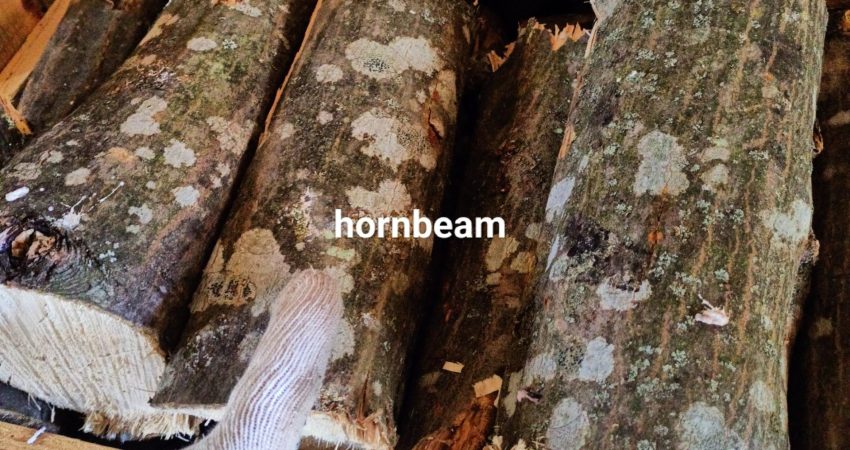
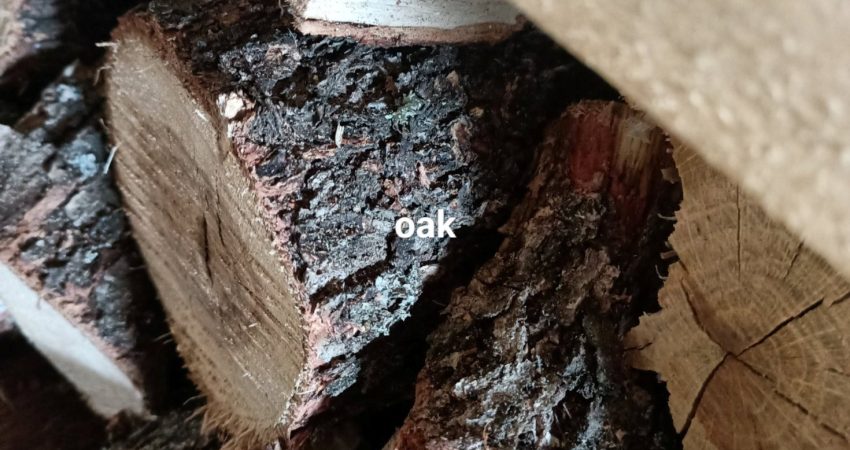
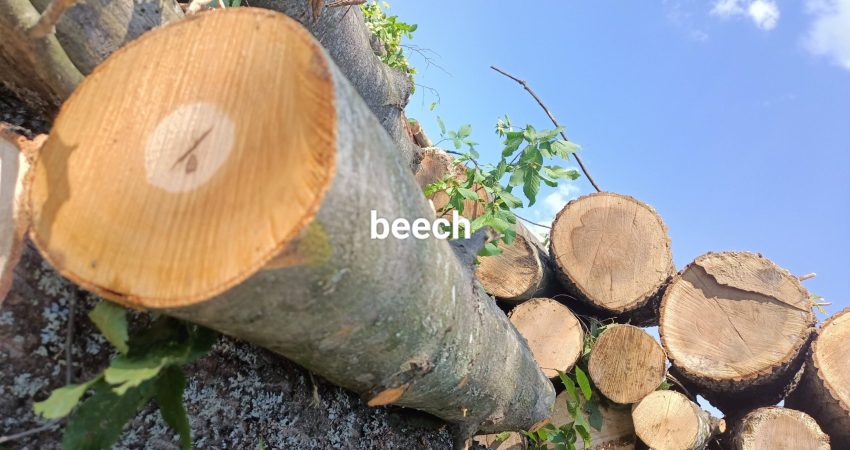
Birch, which the consumers of Northern Europe are used to, is not available for industrial cutting in Bulgaria
We often to receive a question – what kind of wood is better to use as firewood?
Let’s try to answer it together. So – when we burning firewood, we need to get not only good smell, the beauty of burning and less smoke, but most importantly – good HEAT PRODUCTION or simply – a larger volume of heat.
Calorific value of firewood
The amount of heat released during firewood combustion depends on the type of wood and the moisture content of the wood. Absolutely dry hardwood firewood produces about 5 kWh of heat per kilogram of firewood. Absolutely dry soft wood gives about 5.2 kWh of heat per kilogram of firewood , due to the chemical difference of their wood.
The table below shows the calorific value of different types of wood at atmospheric drying humidity (about 25%) and for comparison of other types of fuel:
| averages values calorific capacity per one storage meter (RM) of firewood. | |||||
| Firewood ( natural drying) | Calorific capacity kW .h od /kg | The calorific value is mega J /kg | Calorific capacity MW h unit / | Density kg / | |
| storage meter | Bulky density (kg/dm3 | storage meter (RM) | |||
| Hornbeam firewood | 4.2 | 15 | 2.1 | 0.72 | 495 |
| Beech firewood | 4.2 | 15 | 2.0 | 0.69 | 480 |
| Ash firewood | 4.2 | 15 | 2.0 | 0.69 | 480 |
| Oak firewood | 4.2 | 15 | 2.0 | 0.67 | 470 |
| Birch firewood | 4.2 | 15 | 1.9 | 0.65 | 450 |
| Larch firewood | 4.3 | 15.5 | 1.8 | 0.59 | 420 |
| Pine firewood | 4.3 | 15.5 | 1.6 | 0.52 | 360 |
| Spruce firewood | 4.3 | 15.5 | 1.4 | 0.47 | 330 |
The calorific value of firewood largely depends on humidity. It is generally accepted that firewood with a moisture content of no more than 20% is best suited for a furnace. Indicators of calorific efficiency (the amount of heat released during the complete combustion of 1 kg of firewood from humidity) depending on the following tables:
| Volumetric calorific value of firewood depending on humidity: | ||||||
| Breed | Calorific value, kcal/dm3, at humidity, % | Calorific value, kWh/m3, at humidity, % | ||||
| 12% | 25% | 50% | 12% | 25% | 50% | |
| Oak | 3240 | 2527 | 1110 | 3758 | 2932 | 1287 |
| Larch | 2640 | 2059 | 904 | 3062 | 2389 | 1049 |
| Birch | 2600 | 2028 | 891 | 3016 | 2352 | 1033 |
| Cedar | 2280 | 1778 | 781 | 2645 | 2063 | 906 |
| Pine | 2080 | 1622 | 712 | 2413 | 1882 | 826 |
| Aspen | 1880 | 1466 | 644 | 2181 | 1701 | 747 |
| Spruce | 1800 | 1404 | 617 | 2088 | 1629 | 715 |
| Fir | 1640 | 1279 | 562 | 1902 | 1484 | 652 |
| Poplar | 1600 | 1248 | 548 | 1856 | 1448 | 636 |
Although the mass calorific value of soft wood is greater than that of hardwood, but due to the lower density of wood, the specific volumetric calorific value of soft wood is lower than that of hardwood. Soft firewood takes up more space and burns faster.
A cubic meter of dry hardwood can replace 200 liters of oil, 210 cubic meters of natural gas. The energy extracted from firewood also has a solar origin. However, unlike oil, coal and gas, wood is a renewable resource. Firewood as a type of biofuel is a source of renewable energy .
Thus, the best firewood for heating is firewood with the highest density and lowest moisture 🙂 So , respectively, in descending rate – hornbeam, beech, ash, oak, birch, etc. but necessarily – Kiln dryed.